Software and SaaS development
Digital products that solve, scale and evolve.


Insights
Guides, analysis and lessons on product, artificial intelligence, growth, communications and cloud.
Editorial themes
Digital products that solve, scale and evolve.
AI systems for real-world processes.
Demand, catalogue, partners and conversion.
Every conversation in the right channel.
Available, observable and ready services.

Choosing which tasks to run in the background depends on what users need to do next, the cost of waiting, and how they can check the result later.
↗
An empty search can point to a difficult query or a catalog problem. Learn how to diagnose the cause and offer useful alternatives without sacrificing relevance.
↗
Define data freshness according to the decisions it supports. Set acceptable delays, make lag visible, and decide what to do when information becomes outdated.
↗
Learn how to distinguish products, variants, and offers, and assign consistent identifiers and attributes to prevent duplicates when connecting sales channels and systems.
↗
Decide which tasks can continue without a network, what data to store locally, and how to sync changes without hiding risks or creating conflicts.
↗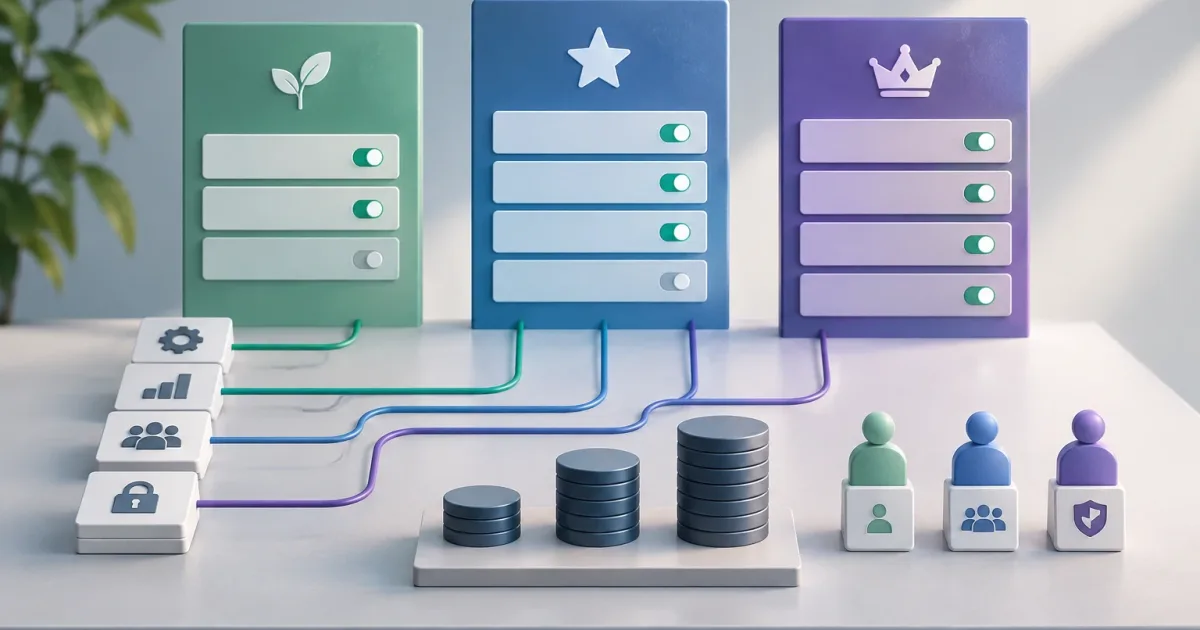
Separate plans, features, limits, and permissions to offer flexible options without duplicating rules or creating inconsistencies between the interface and the API.
↗
A practical permissions review can uncover inherited access, ownerless accounts, and excessive privileges before they disrupt operations or create unnecessary risk.
↗
Set API quotas according to the consumer, operation, and available capacity. Learn how to respond when limits are exceeded and refine policies using metrics.
↗
Learn how to turn business rules into observable scenarios, cover exceptions, and validate workflows across systems with clear acceptance criteria.
↗
A practical framework for deciding whether to fix an individual incident, eliminate its root cause, or redesign the process based on frequency, impact, and risk.
↗
Set rules for detecting duplicate customers, deciding which records to merge, and protecting useful data through confidence levels, human review, and traceability.
↗
Compare roles and contextual rules to decide who can do what in a B2B application. Identify signs of complexity and plan a safe evolution.
↗