Software and SaaS development
Digital products that solve, scale and evolve.


Insights
Guides, analysis and lessons on product, artificial intelligence, growth, communications and cloud.
Editorial themes
Digital products that solve, scale and evolve.
AI systems for real-world processes.
Demand, catalogue, partners and conversion.
Every conversation in the right channel.
Available, observable and ready services.

Define what information each agent needs to resolve a case, and how to limit, retrieve, and log access without replicating unnecessary data.
↗
A useful export starts by defining which data leaves the system, who can request it, and how the file is protected. This guide offers practical design criteria.
↗
Set how long each integration can wait, decide what happens when the limit expires, and recover uncertain outcomes without duplicating actions or leaving processes stuck.
↗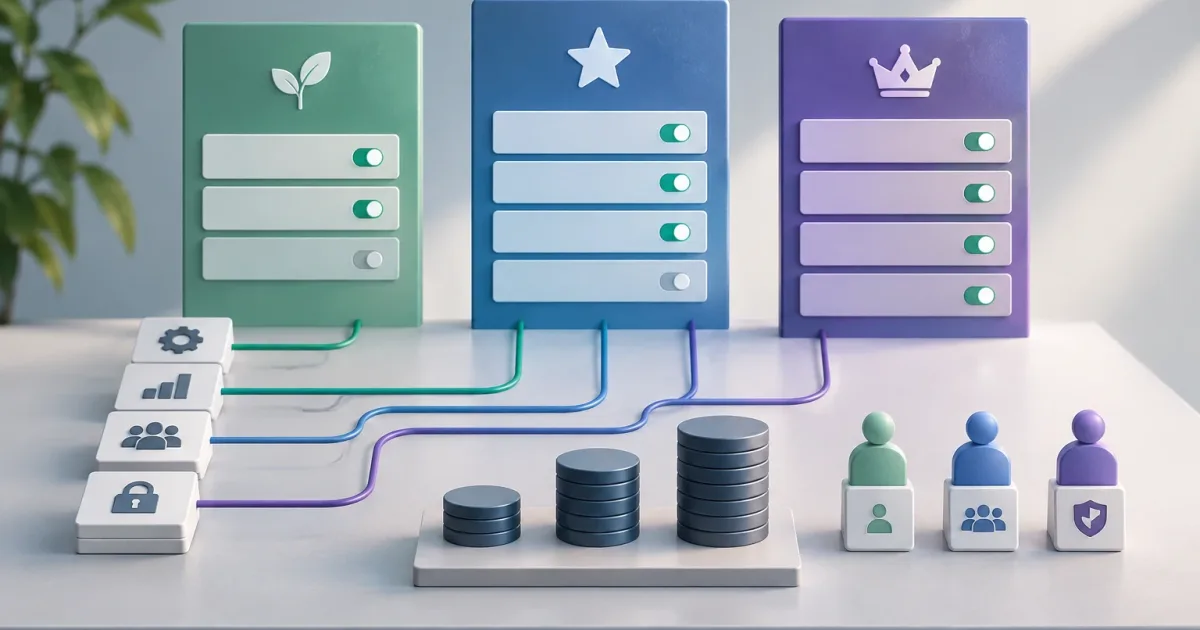
Separate plans, features, limits, and permissions to offer flexible options without duplicating rules or creating inconsistencies between the interface and the API.
↗
A practical permissions review can uncover inherited access, ownerless accounts, and excessive privileges before they disrupt operations or create unnecessary risk.
↗
An integration sandbox lets you validate connections without affecting live operations. Learn when to use one, what it should reproduce, and how to manage differences from production.
↗
Learn how to choose product analytics events and properties based on real decisions, reduce noise, and verify that your data is reliable before using it to guide product work.
↗
Compare shared databases, separate schemas, and dedicated databases to choose the data isolation model that fits your SaaS risks, customers, and team.
↗
Learn when a shared inbox no longer works and how to design a work queue with priorities, owners, and traceability that supports daily operations.
↗
A spreadsheet can support useful processes for years. This framework helps identify when its flexibility becomes an operational risk.
↗
Learn to distinguish functional history, audit trails, and operational traceability to record the right events, protect data, and provide useful evidence.
↗
A practical framework for deciding which data travels in an event, which data is retrieved later, and how to avoid dependencies, stale data, and security risks.
↗