Software and SaaS development
Digital products that solve, scale and evolve.


Insights
Guides, analysis and lessons on product, artificial intelligence, growth, communications and cloud.
Editorial themes
Digital products that solve, scale and evolve.
AI systems for real-world processes.
Demand, catalogue, partners and conversion.
Every conversation in the right channel.
Available, observable and ready services.

Define what information each agent needs to resolve a case, and how to limit, retrieve, and log access without replicating unnecessary data.
↗
Learn how to deploy schema changes while application versions coexist, using validation and gradual removal to reduce disruption and risk.
↗
Learn when a backfill is necessary, how to define its scope and choose a method, and how to validate results without duplicating notifications, charges, or changes.
↗
Define where promotions are managed, how discounts combine, and what to validate before publishing to reduce discrepancies between sales channels.
↗
Compare persistent migration with read-time transformation based on consistency, performance, and consumers. Use practical criteria to choose an approach and plan a reversible transition.
↗
Decide where to validate each piece of data based on user experience, authority, and the cost of errors. A practical framework for combining the interface, server, and asynchronous processes.
↗
A multi-region deployment can improve continuity or reduce latency, but it adds complexity. Assess data, dependencies, operating costs, and team capacity before deciding.
↗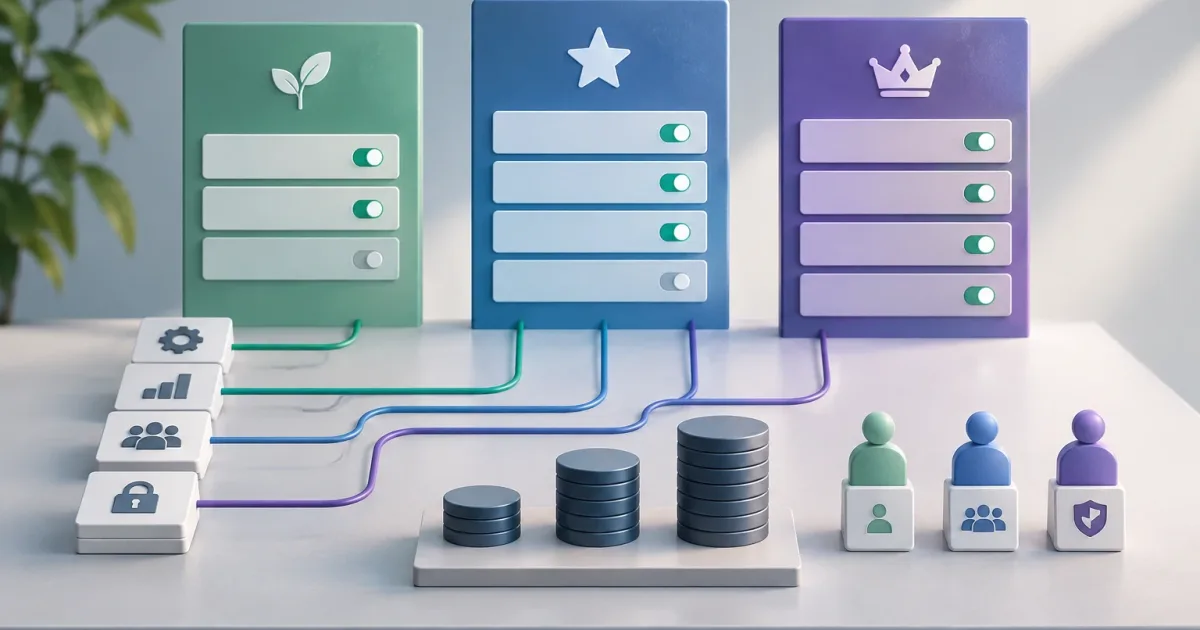
Separate plans, features, limits, and permissions to offer flexible options without duplicating rules or creating inconsistencies between the interface and the API.
↗
A practical framework for choosing, preserving, and reconciling identifiers across CRM, ERP, ecommerce, and custom applications without confusing entities.
↗
Choosing when to reserve inventory prevents overselling and inventory lockups. This framework helps define timing, expiration periods, priorities, and operational controls.
↗
Decide which systems should create, read, and update data to choose synchronization that is secure, manageable, and aligned with each process.
↗
A spreadsheet can support useful processes for years. This framework helps identify when its flexibility becomes an operational risk.
↗