Software and SaaS development
Digital products that solve, scale and evolve.


Insights
Guides, analysis and lessons on product, artificial intelligence, growth, communications and cloud.
Editorial themes
Digital products that solve, scale and evolve.
AI systems for real-world processes.
Demand, catalogue, partners and conversion.
Every conversation in the right channel.
Available, observable and ready services.

Decide which tasks can continue without a network, what data to store locally, and how to sync changes without hiding risks or creating conflicts.
↗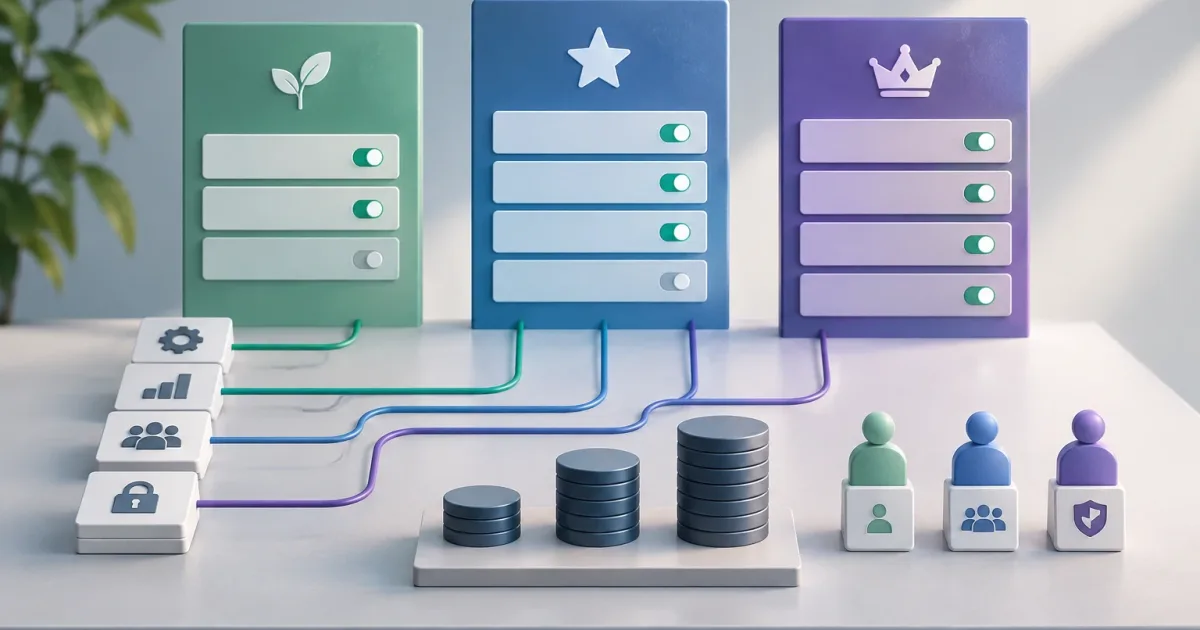
Separate plans, features, limits, and permissions to offer flexible options without duplicating rules or creating inconsistencies between the interface and the API.
↗
A practical permissions review can uncover inherited access, ownerless accounts, and excessive privileges before they disrupt operations or create unnecessary risk.
↗
Set rules for detecting duplicate customers, deciding which records to merge, and protecting useful data through confidence levels, human review, and traceability.
↗
Compare roles and contextual rules to decide who can do what in a B2B application. Identify signs of complexity and plan a safe evolution.
↗
Learn how to assess whether you can replace a SaaS solution without losing data or disrupting workflows by reviewing exports, dependencies, exit tests, and responsibilities.
↗
An idempotency key lets you retry sensitive operations without repeating their effects. Learn how to define its scope, handle concurrency, and respond to errors.
↗
Decide what to translate, adapt, or share based on clarity, risk, market differences, and maintenance. Use practical fallback criteria and a review workflow.
↗
Treat customer offboarding as a verifiable workflow. Revoke access, handle data and integrations, and confirm that no active dependencies remain.
↗
Choosing when to reserve inventory prevents overselling and inventory lockups. This framework helps define timing, expiration periods, priorities, and operational controls.
↗
Decide which systems should create, read, and update data to choose synchronization that is secure, manageable, and aligned with each process.
↗
Shadow mode compares an automated decision with real operations before activation, helping teams identify risks and make evidence-based choices.
↗