Software and SaaS development
Digital products that solve, scale and evolve.


Insights
Guides, analysis and lessons on product, artificial intelligence, growth, communications and cloud.
Editorial themes
Digital products that solve, scale and evolve.
AI systems for real-world processes.
Demand, catalogue, partners and conversion.
Every conversation in the right channel.
Available, observable and ready services.

A practical framework for deciding when to let users undo, restore, or correct actions based on their impact, recovery costs, and effects on connected systems.
↗
Choosing which tasks to run in the background depends on what users need to do next, the cost of waiting, and how they can check the result later.
↗
A manual review queue turns automation exceptions into understandable, assignable, traceable cases, with clear actions and defined criteria for resolution.
↗
An empty search can point to a difficult query or a catalog problem. Learn how to diagnose the cause and offer useful alternatives without sacrificing relevance.
↗
Learn how to distinguish products, variants, and offers, and assign consistent identifiers and attributes to prevent duplicates when connecting sales channels and systems.
↗
Decide which tasks can continue without a network, what data to store locally, and how to sync changes without hiding risks or creating conflicts.
↗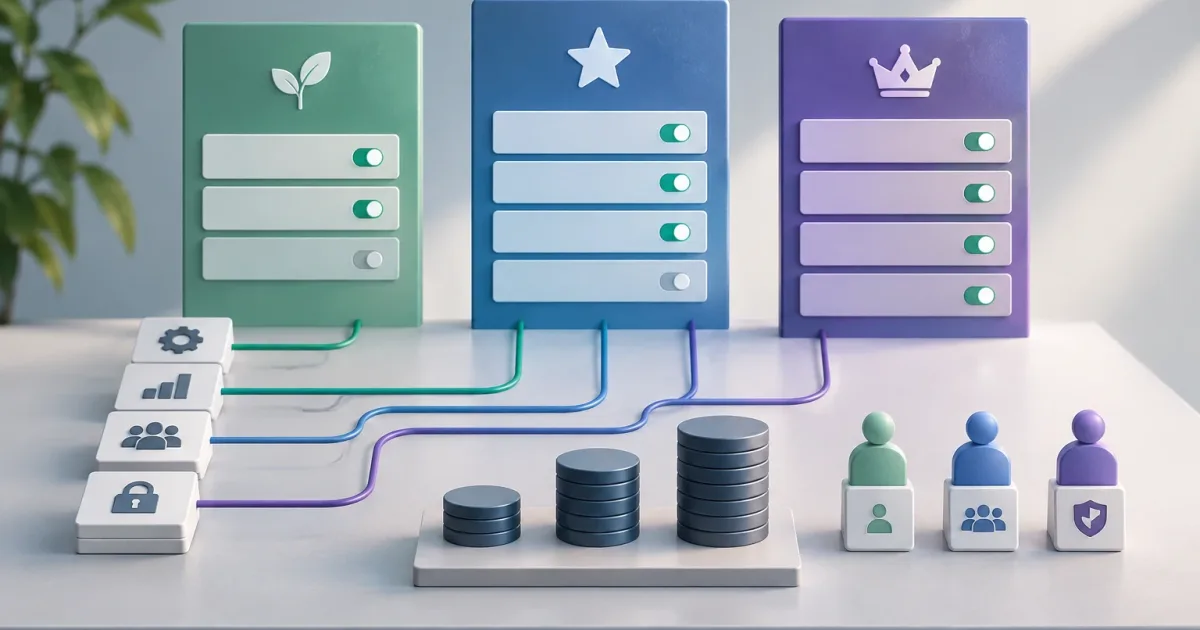
Separate plans, features, limits, and permissions to offer flexible options without duplicating rules or creating inconsistencies between the interface and the API.
↗
Set API quotas according to the consumer, operation, and available capacity. Learn how to respond when limits are exceeded and refine policies using metrics.
↗
An integration sandbox lets you validate connections without affecting live operations. Learn when to use one, what it should reproduce, and how to manage differences from production.
↗
Learn how to assess whether you can replace a SaaS solution without losing data or disrupting workflows by reviewing exports, dependencies, exit tests, and responsibilities.
↗
Decide what to translate, adapt, or share based on clarity, risk, market differences, and maintenance. Use practical fallback criteria and a review workflow.
↗
Compare offset and cursor pagination by stability, navigation, data volume, and cost. Choose the contract your API needs and plan a migration without breaking clients.
↗